
Using Speech in Action to Help Kids Connect
What is Speech in Action?
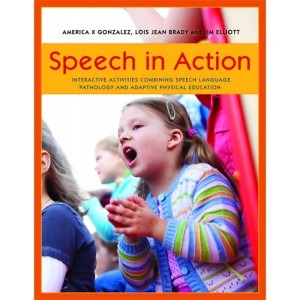
Speech in Action is a concept discussed by America X Gonzalez, Lois Jean Brady and Jim Elliot in their book Speech in Action: Interactive Activities Combining Speech Language Pathology and Adaptive Physical Education. It combines speech therapy and movement to make a therapy session more engaging. When using these strategies, children learn because the sessions are fun, exciting, and meaningful.
Why Speech in Action Works
Traditional education relies on treating the brain and body as separate components, but since the brain is connected to the body, it is unnecessary to teach cognitive and physical skills in isolation. Movement is essential for children to learn and creates an environment for communication.
“Taking the idea that the whole is better than the sum of all parts, we can begin to understand why Speech in Action’s synergistic approach can yield better results than simply doing these therapies in isolation” (page 13).
How to Use Speech in Action
Parents, teachers, educational assistants or daycare inclusion workers can use this book by opening it to any page and choosing an activity. The book includes 89 activities that are developed with the understanding that children who are non-verbal or late talkers use their vestibular sense to express themselves. Movement is essential for children to learn and this movement creates an environment for communication. Each activity helps foster a variety of language skills in a therapy room, gym or outdoors.
Activities provide an opportunity for pro-social behaviours by using movement and social interactions that are naturally found in sports and teamwork. These activities provide children with needed social interactions which are supported with movement.
Each session begins with a warm up and a cool down using breathing and yoga techniques.
Praising Accomplishments
It is important to use specific praise to build engagement and help the child know that their words and actions are valued. Praising the exact accomplishment will make a child more aware of their success and gifts. Instead of vague praise, like saying “good job”, be more specific and say“Good job staying inside the line!”, for example, so they know what they did well.
Conclusion
The book is thoughtfully written and easy to use, since each activity is well planned. All the lessons provide a great way to use movement to energize the senses to create engagement with children. These lessons provide ways to help enhance children’s sensory diet while promoting and strengthening much needed language skills.