Picture Books to Play With
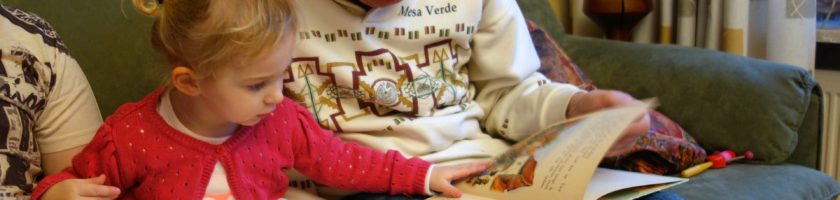
There are many reasons to read picture books with children. Exploring new ways to communicate, enjoying a shared joke, learning about feelings, learning about the world, and finding ideas to expand play are all wonderful reasons to read.
Two excellent criteria for choosing books are:
- Look for books that connect with your child’s interest
- Look for books that suggest ideas for active play.
The following books might fit those criteria for your child!

Pete’s a Pizza
Pete’s a Pizza by William Steig features Pete – a boy who plays the role of a pizza. Pete’s grandpa puts the topping on Pete (at Pete’s direction) and “bakes” him. This game can be played with your child as you read the book. It provides a great opportunity for sensory play.

Alphabet City
Alphabet books are wonderful for exploring letters, and there are so many of them. Alphabet City by Stephen T. Johnson is special because it invites children to identify letter shapes in familiar objects. You and your child can look for letters in your own environment, whether they are “accidental” letters or real ones.

Best Word Book Ever
Some children are drawn to picture dictionaries. Best Word Book Ever by Richard Scarry is a great one. The stories are silly and the cartoonish images of animals in clothes are engaging and tell the story without needing any words. Having a set of magnetic letters while you read will provide a tactile element for your child.

Just Grandma and Me
Mercer Mayer has written many books about Little Critter and his family. Just Grandma and Me is a highlight. You and your child can go to the beach and act out the scenes in this book.

Lunch
Lunch by Denise Fleming offers a sensory exploration of various vegetables that a greedy little mouse gobbles up. It provides a great opportunity for sensory engagement through touch, smell, and taste. After reading this book you can:
- take a trip to the grocery store
- prepare and enjoy a picnic
- play with pretend food

Caps, Hats, Socks, and Mittens
Caps, Hats, Socks and Mittens by Louise Borden gives children words to talk about the changing seasons. It offers ideas for seasonal activities to do together throughout the year, such as:
- playing with leaves
- sledding
- making mud pies
- planting seeds
- playing in the sprinkler

Pocketful of Posies: A Treasury of Nursery Rhymes
Every family should have a collection of nursery rhymes. They are a great introduction to stories that are familiar to most people, many can be acted out, and they often rhyme which helps children recognize sounds in words as they start reading.
The embroidery and felt illustrations in Pocketful of Posies by Sally Mavor are detailed and inviting. The book lends itself to simple dramatic play with dolls.

Block City
Block City by Robert Louis Stevenson and Daniel Kirk is an illustrated poem from Stevenson’s A Child’s Garden of Verses, turned into a picture book. The boy in the pictures builds a city out of blocks and thinks about the people who might live in his city. If you have blocks at home, you can try to copy or make your own version of the structures in the book.
Dreaming Up by Christy Hale, How a House is Built by Gail Gibbons, and Building a House by Jonathan Bean are other books for aspiring builders.

Chugga Chugga Choo Choo
Chugga Chugga Choo Choo by Kevin Lewis is a simple book about trains with pictures of the toys going on a trip. This book lends itself to playing with trains. Building tracks and driving trains can be lovely collaborative activities. Other train books: Freight Train by Donald Crews and Locomotive by Brian Floca.

Not a Box
For children who are ready for symbolic play (pretending a real object is actually something else) Not a Box by Antoinette Portis provides many opportunities to stretch the imagination. It’s about all the things a box could really be…and an invitation to think of more. The author has written a similar book called Not A Stick.

It Looked Like Spilt Milk
This book by Charles G. Shaw contains simple designs of white clouds on a deep blue background, inviting children to talk about what they see. And that’s it. This is the perfect book to read lying in a hammock or on the lawn. After reading you might also make your own cloud shapes with soap bubbles, shaving cream, chalk or white paint.

Harold and the Purple Crayon
This book by Crockett Johnson might make you want to draw. It’s a fantasy in which Harold finds he can draw his world – and solve some problems- with his magic purple crayon. Lay a big piece of paper on the floor, and this book can be the beginning of many hours of doodling together.
A more sophisticated but similar adventure is Journey by Aaron Becker.

Once There Was a Raindrop
Nonfiction books are another kind of book to explore. Once There Was a Raindrop by Judith Anderson is one book in a series about science. Reading this one could lead to exploring seeds, caterpillars, and puddles outside.

Swimming, Swimming
This almost wordless book by Gary Clement follows a boy through his day – getting ready to swim in his room, to the pool, and home again. Kids who are familiar with swimming pools will relate to the (sometimes funny) things people are doing. It’s a great way to think about what to notice and try next time you go to the pool.

The Snowy Day
by Ezra Jack Keats
This classic picture book by Ezra Jack Keats is a lovely, simple story about a boy’s walk in the snow. He makes a snowball to keep in his pocket (later he wonders where it went!), makes snow angels, and slides down hills. A favorite line: “Down came the snow – plop! – on top of Peter’s head.” This is the perfect wintertime book.

Feelings
This book by Aliki gives children a sort of visual dictionary of all kinds of emotions, and the situations that lead to them, in cartoon form. For example, the page about “New Girl in Class” has a girl standing with her hands clasped and pink cheeks, wondering why everyone is staring at her, while one of the other kids is thinking “she looks nice.” It works as an example to act out some real life situations or start doing your own sketches to help your child process what’s happening in their lives.
What books are your child’s favorites? Feel free to share in the comments below.
Further information on reading with your kids:
- Scholastic: Why It’s Important to Read Aloud with Your Kids, and How to Make it Count
- ADAPT: A Trip to the Library
- 10 Ways Your Child with Special Needs Can Benefit from a Trip to the Library
- The Hanen books More Than Words and Talkability each have chapters about enjoying books and learning together through reading. The Hanen website has a Book Nook section with more recommendations illustrating ways to enjoy books together with your child.